This post is sponsored by Farnam, but all opinions expressed are my own.
Let’s face it, as equestrians we all experience the annoying insects that fly around the farm which may include everything from gnats, horse flies, no see-ums, mosquitos, and everyday barn flies. Certain times of the year are worse than others, and typically that’s during the summertime months where it’s warmer and usually more humid. Insects love warm and damp climates. Here in Florida, we get pesky flies all year round, and it takes the entire barn staff to be on board with consistent fly control. Not only are flies intrusive and annoying, but they also can carry and spread diseases. Sensitive horses and wounds are most susceptible, but all horses are at risk for eye problems when it comes to flies. In this post, we will address ways to block, repel, and reduce flies at the barn to protect you and your horses. It’s time to create a No-Fly-Zone once and for all!
First, let me start by saying that not all fly products are created equal. My family has had horses since before I was born, so understanding what works and what doesn’t work takes many years of trial and error. Flies love to congregate year-round here in Florida, so having enough fly repellent and protection supply on hand is key. Installing a fly control automatic system throughout the barn will keep the flies down, but there are also equally important and less-expensive ways to combat them as well.
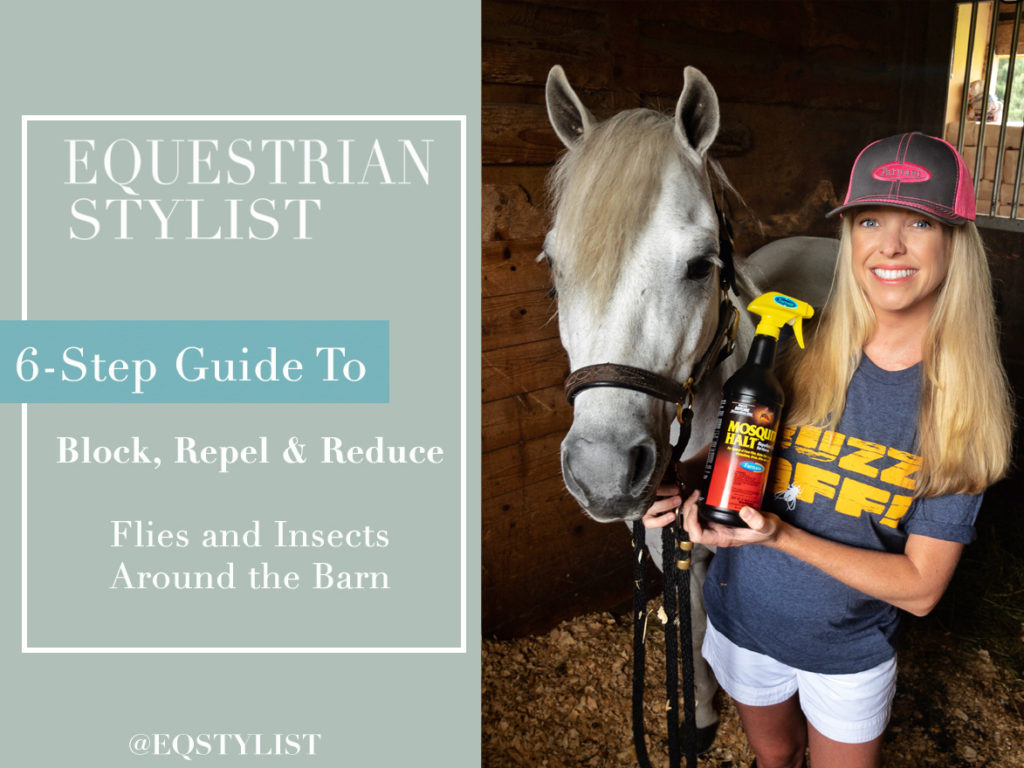
Farnam offers protection on all fronts for our beloved equines. The winning combination to battling bugs at the barn is to block, repel, and reduce the fly population. To block, we create a physical barrier to keep flies and pests away from the horse’s ears and face. To repel, we use products that repel and kill flies and pests on the horse and in the environment. To reduce, we decrease the population in the barn as a whole.
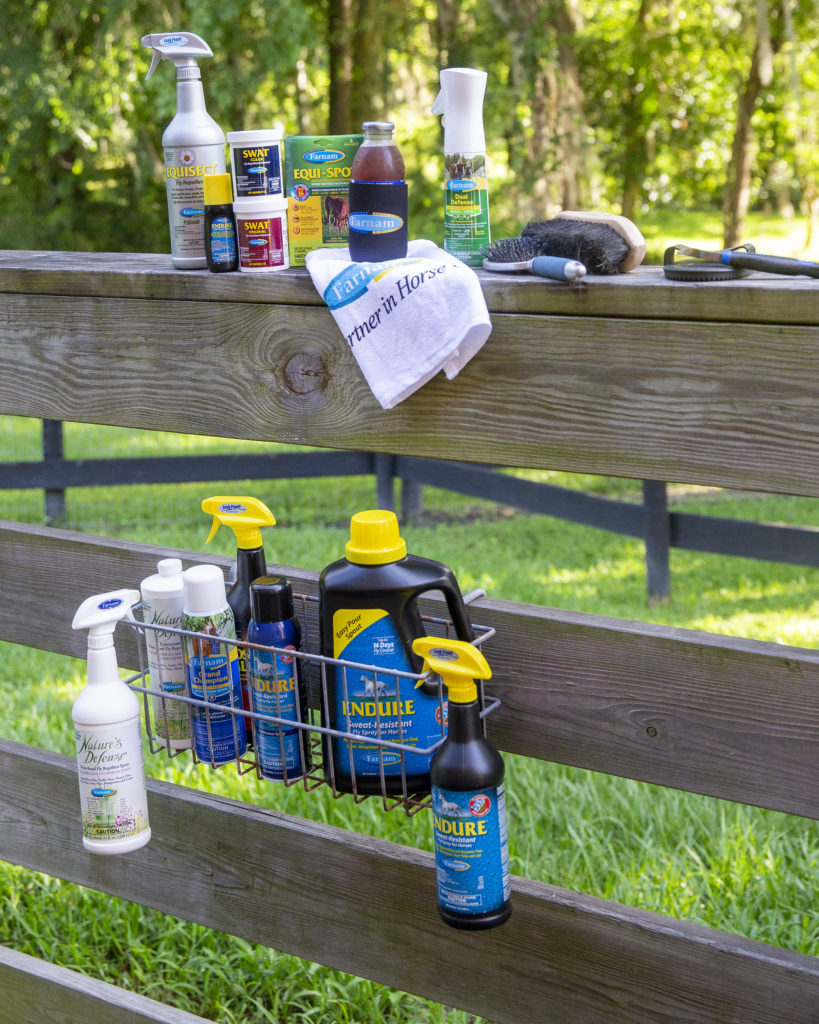
Below is our 6-step guide to combat pests and keep you and your horses happy and free from the flies all summer long.
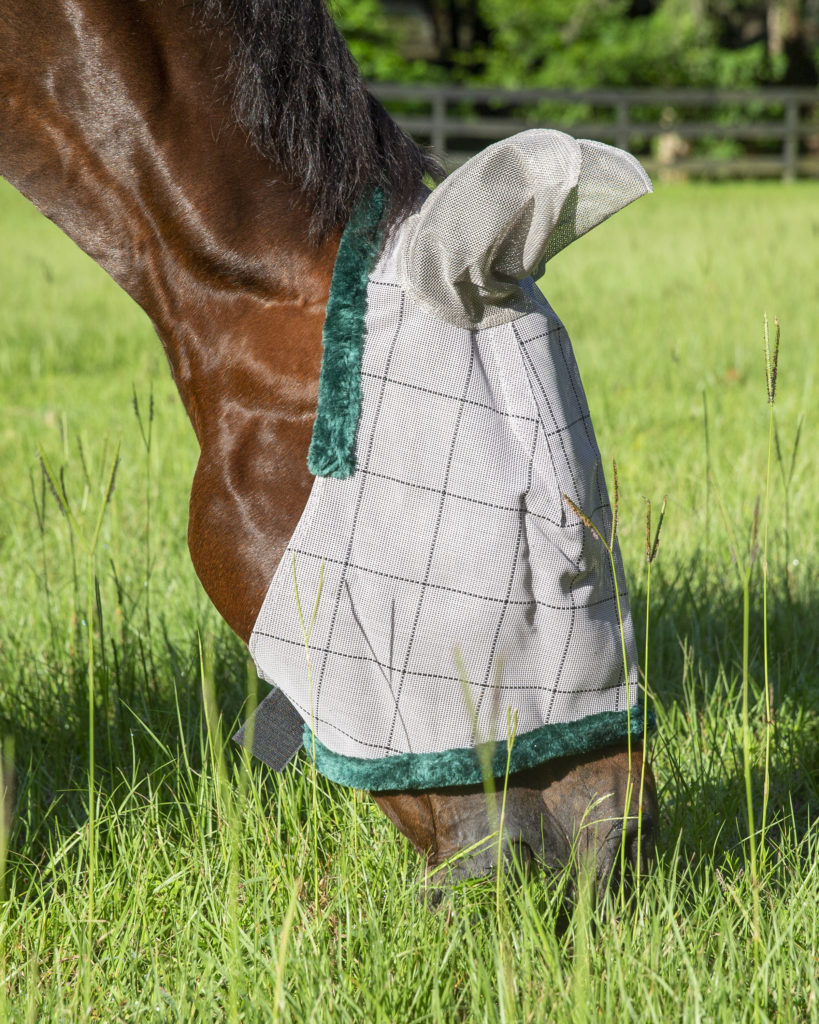
1. All Horses Get Their Own Fly Masks – Fly masks are a critical accessory for every horse in the barn. As stated earlier, flies are attracted to horse’s eyes and can cause infections and
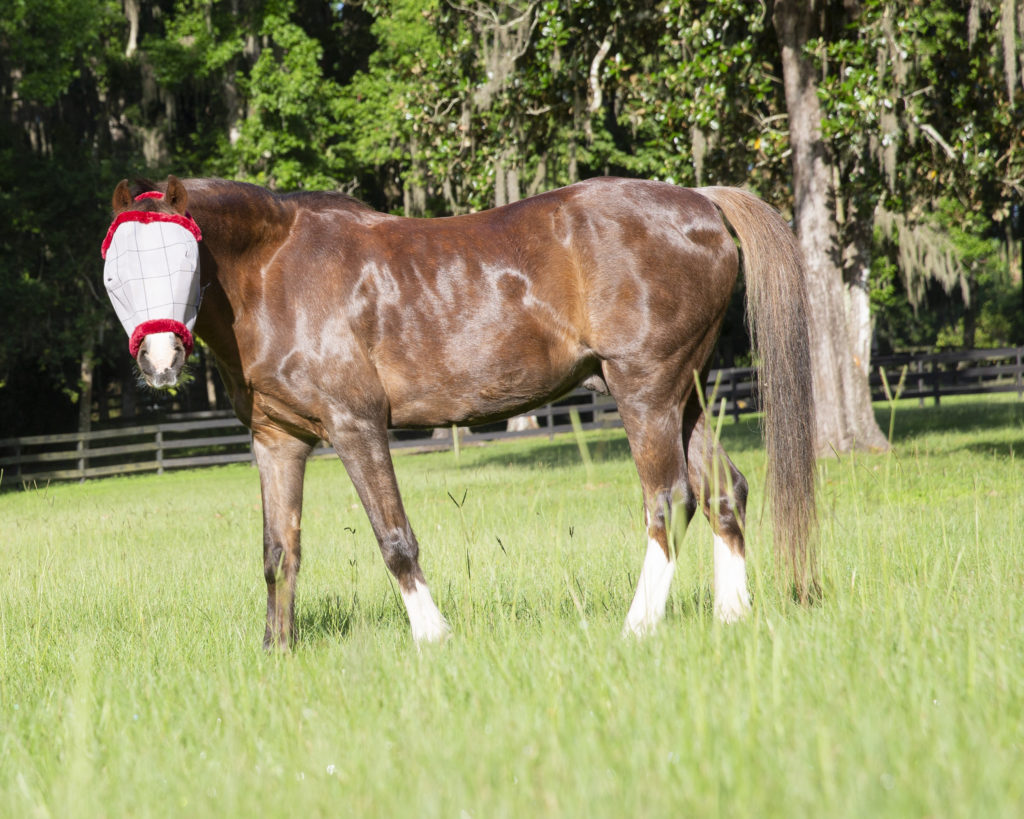
irritations, so using a fly mask is the best way to block flies from congregating around your horse’s eyes and ears. The fly masks we use are the SuperMask II’s by Farnam.
Some horses are better suited for fly masks with ear screens, and some prefer fly masks without. The mask should cover the entire face of the horse and not be too snug or too loose.
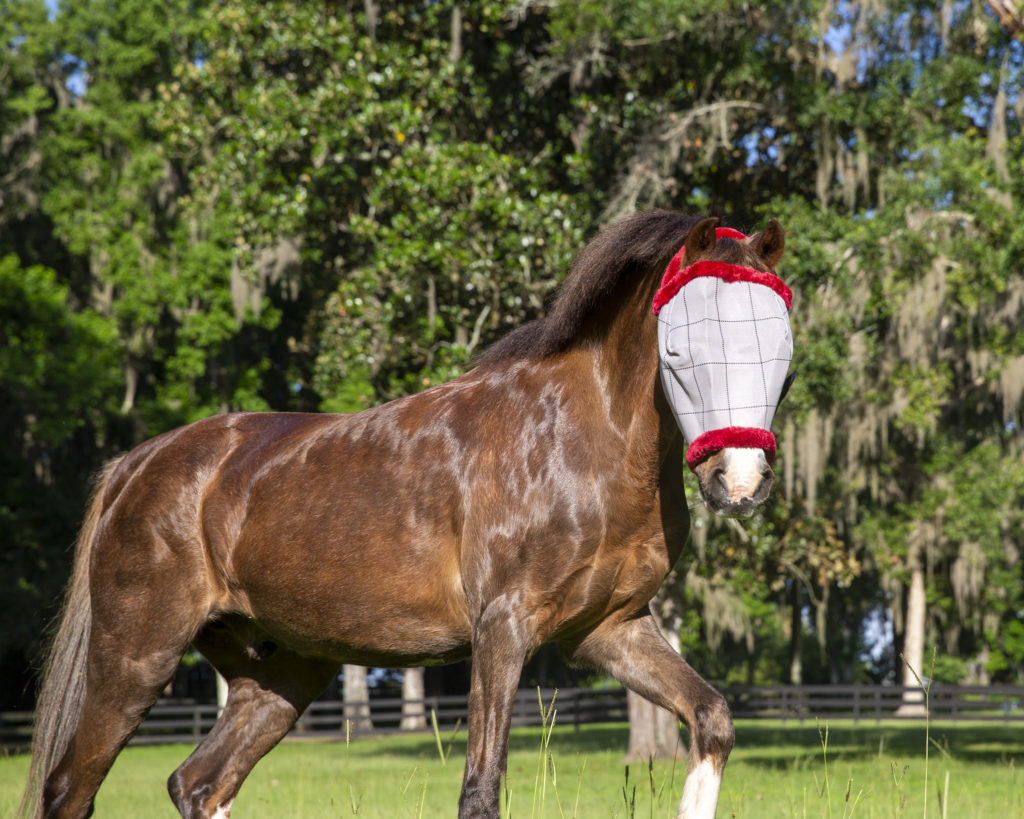
Fly masks also help prevent irritations in the horse’s eyes from grass seedlings. We firmly believe in using fly masks for daily turnout to block your horse or pony’s face completely from all pests.
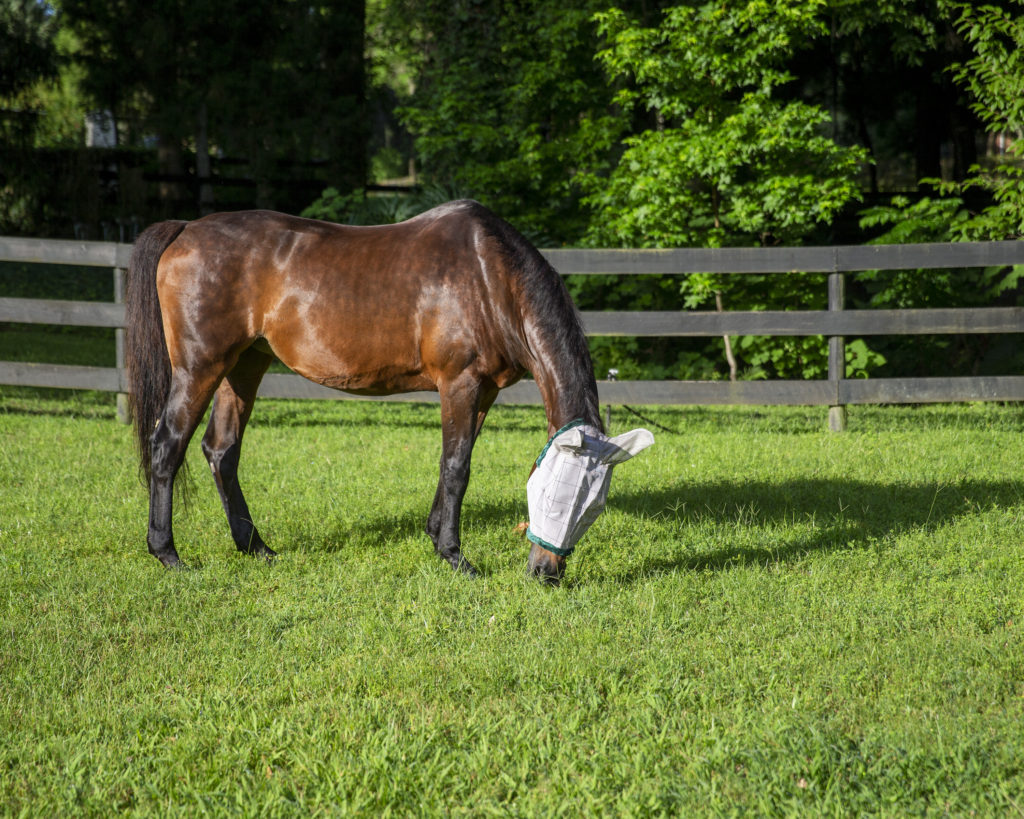
I love to think of fly masks like a screened-in porch for your horse. They can see fine through them, and they get complete coverage from flies on their face.
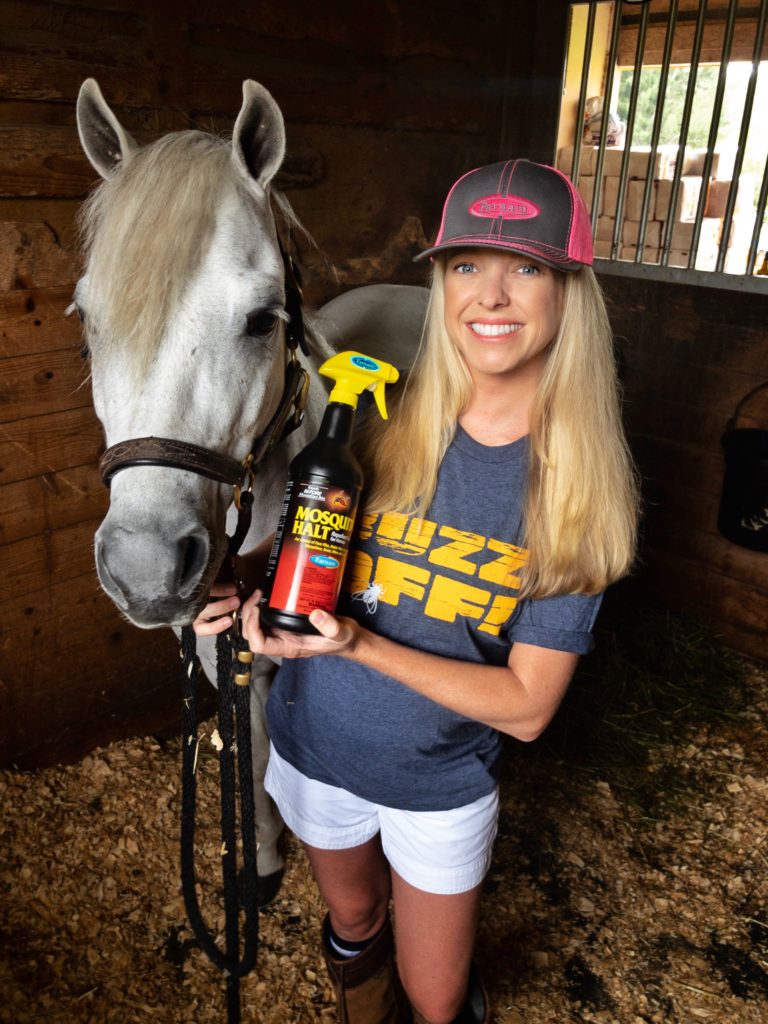
2. Fly Spray Regularly (and while the horse is the stall) – One of the best practices we use for fly control is fly spraying the horses inside the stall, and not out in the open. The remaining spray settles onto the shavings and also helps block and repel the flies inside the stall. Farnam makes one of our favorite fly sprays we’ve been using for years called, Mosquito Halt. For Florida climate, we’ve found it does the best job in keeping mosquitos and flies away. If you like to switch it up every now and then, the other products we love are Nature’s Defense, Endure, and Equisect.
The Nature’s Defense fly spray is a more holistic all-natural water-based spray that smells great with essential oils like clove, mint, thyme, and citronella. This spray won’t irritate sensitive skin and is free from preservatives, additives, or artificial colors.
 3. Use SWAT on any open cuts or wounds – Keeping flies away from wounds and cuts is a critical healing measure. We like using the Swat Original pink ointment version to be sure we can spot it on the horse’s wound to make sure it’s completely covered.
4. Keep Manure to a Minimum – We can’t stress this enough. It’s very simple… Clean
the manure out of the stall morning and night. Horses don’t want to be standing in it, and flies love horse poo, too. Did you know…flies lay their eggs in it, (gross, I know) and they multiply by the minutes the longer manure sits in the stall or around the farm. While we know many farms spread their manure in the pastures, this can be one of the worst
things you can do for fly management. If you can compost the manure, that may help break it down, but we strongly believe in removing manure from the property completely. We recommend using a dumpster on the property to contain the manure, cover it, and haul it away far, far away.
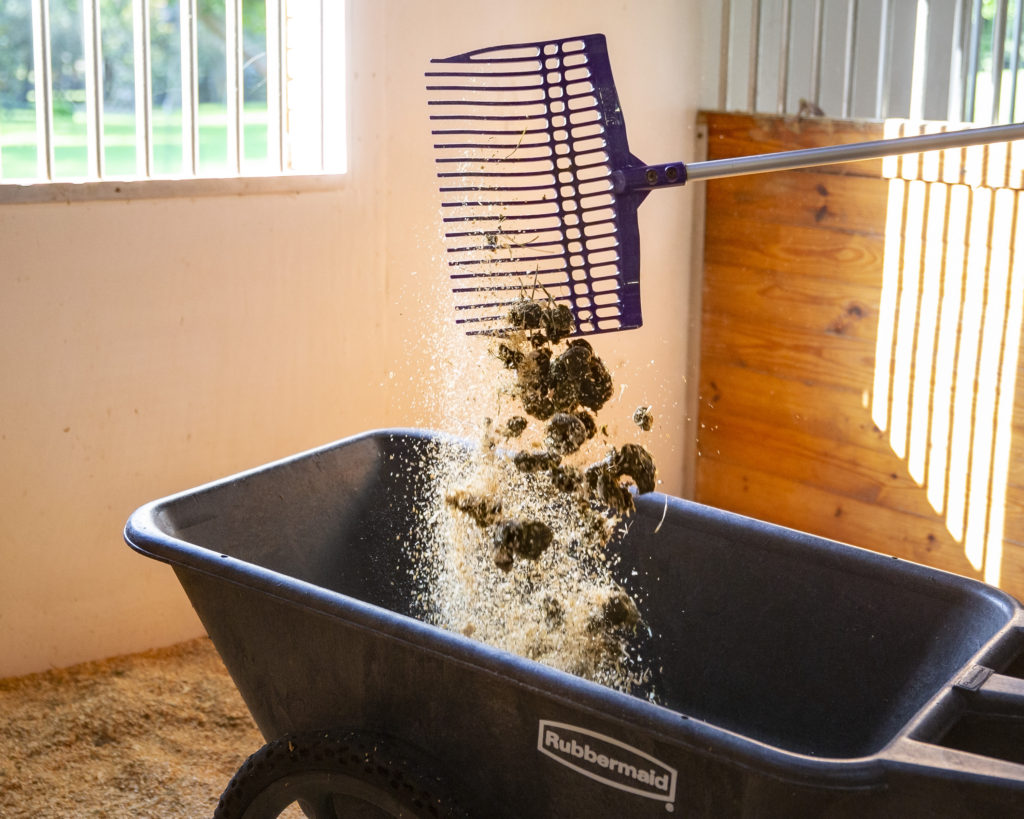 5. Wash Your Wheelbarrow – Even the smell of urine and manure can attract flies. This is another simple strategy to keep flies from hanging out around the barn, and it also keeps your equipment in great shape.
6. Keep your horses clean & conditioned! – This one is so simple, and so many people forget that if you don’t wash your horse regularly, they also may have manure remnants on their coat to attract the flies. We recommend using the Grand Champion Conditioning Spray after the bath to keep their coat shiny, but also repelling the dust that attracts flies. This spray is great for the horse show ring, too. We keep some in our show-ring grooming box to give a little extra sheen before the horse enters the ring.

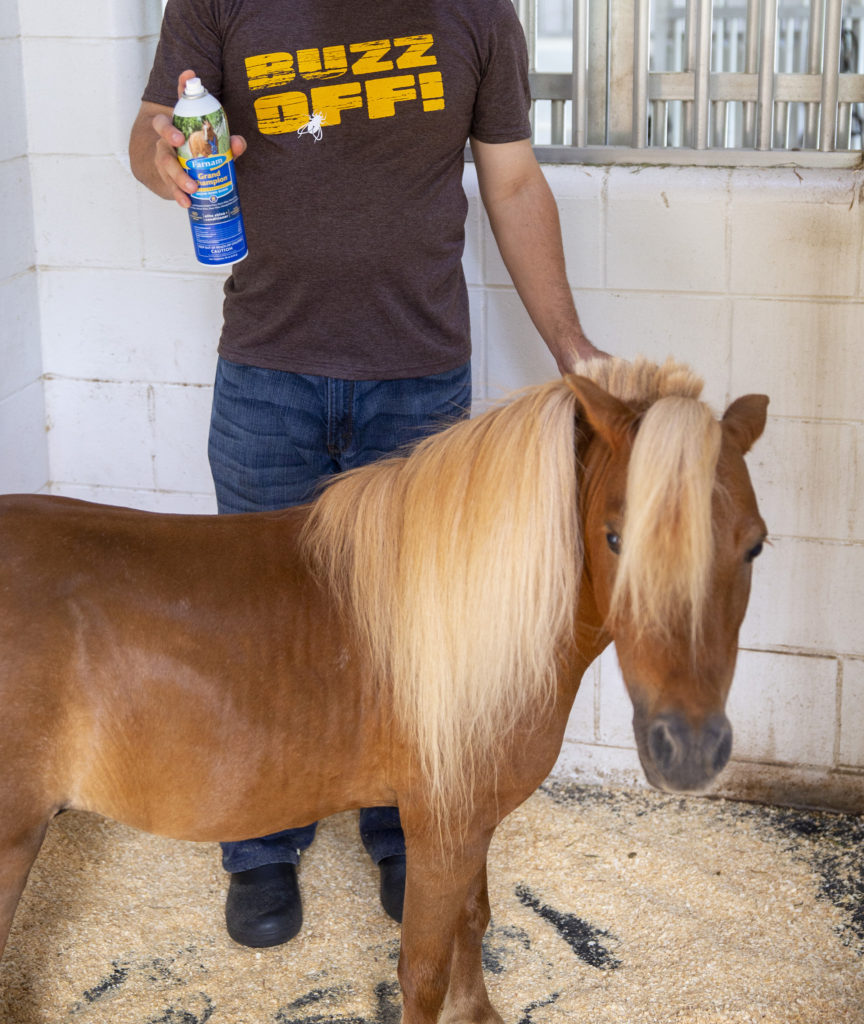
“Fonzi” the mini horse is retired from his showing career, so he wasn’t as thrilled with being conditioned and groomed. But, we’re happy to say he’s thrilled with being fly-free!
Managing flies and pests around the farm takes everyone to be on board, but when you follow a system and stick to keeping the barn clean, you’ll be well on your way to a successful no-fly zone.
Love this post, and want a printout?
Download the 6-Step Guide here
Want to learn more about the best products for your holistic fly control strategy? CLICK HERE!